The chart below contains proposed rates for Plan Year 2027, which will be reviewed for compliance with federal and state requirements. Please submit any comments to DOI.HealthRateReview@illinois.gov by Friday, July 10, 2026.
Initial signups during Open Enrollment were only down 0.8% vs. OEP 2025...but effectuated enrollment was 4.4% lower year over year in January, gradually rising to 11.4% lower as of April, according to Get Covered NJ, the state ACA exchange.
That's over 56,000 Kansans who already lost coverage in just the first four months of the year...a number which has likely continued to climb since then.
ACA exchange enrollment has dropped by 32% in Ohio since Congressional Republicans allowed the enhanced federal subsidies to expire at the end of last year.
Initial signups during Open Enrollment were down nearly 20% vs. OEP 2025...but effectuated enrollment dropped further, by 23% year over year in January and by over 32% in February.
That's over 160,000 Ohioans who already lost coverage in just the first two months of the year...a number which has likely continued to climb since then.
ACA exchangeenrollment has dropped by 7.8% in North Dakota since Congressional Republicans allowed the enhanced federal subsidies to expire at the end of 2025.
Initial signups during Open Enrollment were down 4.4% vs. OEP 2025...but effectuated enrollment was 5.7% lower year over year in January and down 7.8% as of February.
Here's what this looks like visually, with both 2025 and 2019 (the last pre-COVID year, which didn't include the enhanced subsidies) included for comparison:
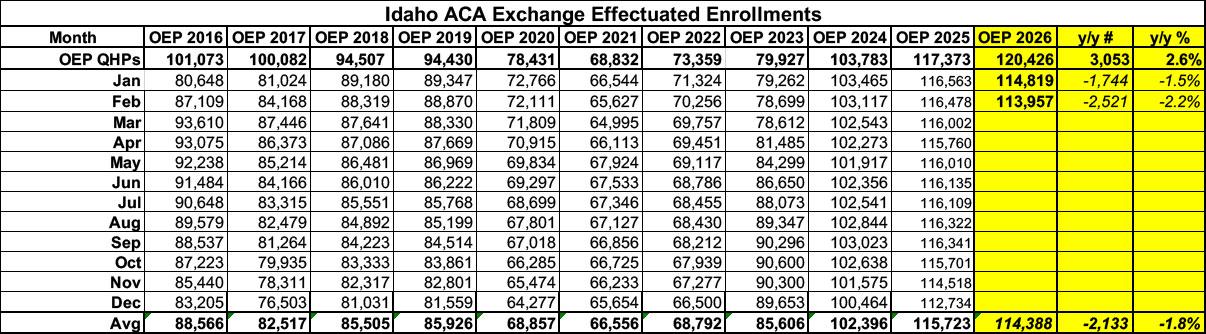
Idaho is one of a handful of states where plan selections during the 2026 Open Enrollment Period actually increased year over year, by around 2.6%, in spite of the enhanced federal subsidies expiring back in December.
Two months into the year, however, effectuated enrollment is actually down slightly (by around 2.2%, or roughly 2,500 enrollees).
Here's what this looks like visually, with both 2025 and 2019 (the last pre-COVID year, which didn't include the enhanced subsidies) included for comparison:
Individual Market Proposed Average Rate Changes for Plan Year 2027
The summary table below provides an overview of the proposed average rate changes from 2026 in the individual health insurance market, as reported by the insurers.
It is important to note these are the initial rates proposed by the insurers and filed with the Departments. Rates are subject to review and approval by the Departments, and the final approved rates may vary from these proposed rates for many reasons.
Additionally, the actual rate change a consumer will experience in 2027 can vary from the average – with factors such as specific plan, geographic rating area, and age playing a major role.
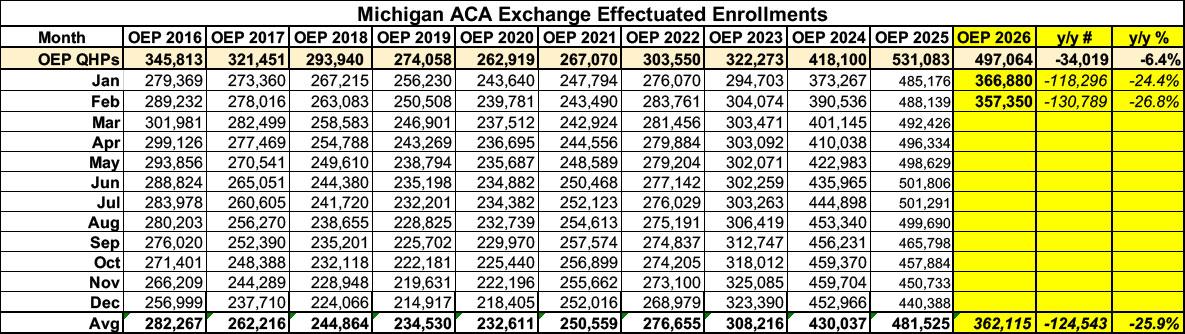
Before I begin, it's important to note that as in most states, ACA exchange enrollment has plummeted in Michigan since Congressional Republicans allowed the enhanced federal subsidies to expire at the end of last year: Effectuated enrollment was down 27% year over year as of February, and has almost certainly continued to drop further since then. That's at least 131,000 fewer Michiganders enrolled in ACA healthcare coverage this year.
Here's what this looks like visually, with both 2025 and 2019 (the last pre-COVID year, which didn't include the enhanced subsidies) included for comparison:
2027 Requested Commercial Health Insurance Rates Have Been Submitted to OHIC for Review
The Office of Health Insurance Commissioner (OHIC) today released the individual, small group, and large group market premium rates requested by Rhode Island’s insurers. The requests were filed as part of OHIC’s rate review process (for coverage effective on or after January 1, 2027).
“Health insurers are once again seeking rate increases to cover the rising cost of health care and other expenses,” said Health Insurance Commissioner Cory King. He continued: “OHIC will thoroughly review these requests to determine whether they are justified.”
Two insurers, Blue Cross Blue Shield of Rhode Island (BCBSRI) and Neighborhood Health Plan of Rhode Island (NHPRI), filed rates for plans to be sold on the individual market to people and families who do not receive insurance through their employer.
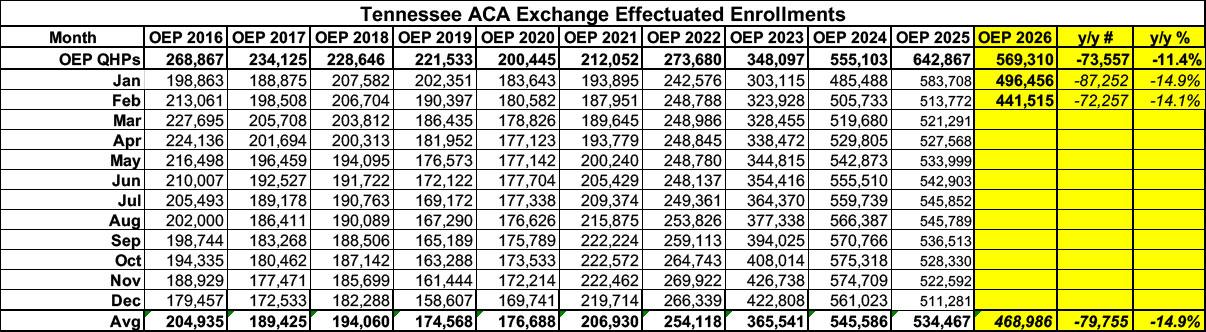
ACA exchange enrollment has dropped by over 14% in Tennessee since Congressional Republicans allowed the enhanced federal subsidies to expire at the end of last year.
Initial signups during Open Enrollment were down 11.4% vs. OEP 2025...but effectuated enrollment dropped by 14% year over year as of February.
That's over 72,000 Tennesseans who already lost coverage in just the first two months of the year...a number which has likely continued to climb since then.
Here's what this looks like visually, with both 2025 and 2019 (the last pre-COVID year, which didn't include the enhanced subsidies) included for comparison: